
/ ABOUT RDG
A team accelerating regenerative development.
The Regenerative Development Group is a mission-driven consultancy helping changemakers design, develop, and finance programs, enterprises, and investments for a nature-positive, equitable future.
Regenerative Development Group brings together senior specialists in sustainable finance, ecology, social safeguards, transboundary water, and stakeholder engagement. Our team has led and advised on landscape-scale programs across Africa, Latin America, the Middle East, and Asia — designing the financial and technical architecture that turns regenerative ambition into implementable projects.
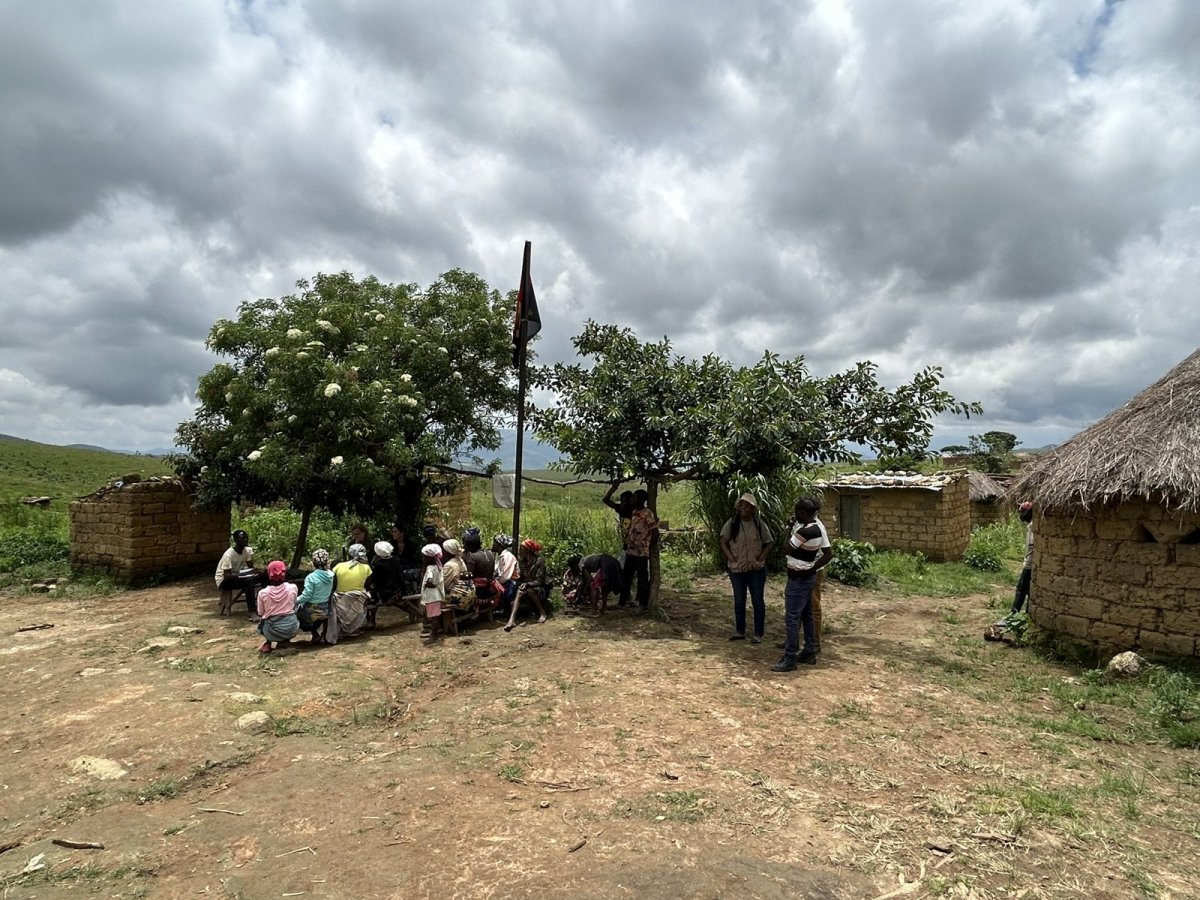
Photo: Angola — Extended Central Plateau scoping mission, February 2024
Our Team
Core strengths
- Blended and sustainable finance
- Climate, nature and landscape finance
- Financial mechanism and facility design
- Institutional investment and sovereign risk
- Results-based management and project evaluation
- Government, investor and community partnerships
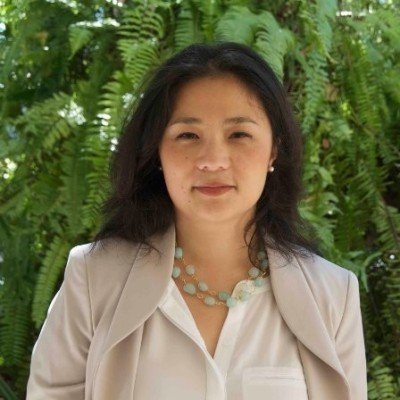
Tammy Tullis
Chief Executive Officer & Sustainable Finance Lead
Tammy Tullis is the CEO and RDG’s sustainable finance lead. She brings hands-on Global Environment Facility (GEF) experience across the project cycle, from design to evaluation.
Tammy is an expert in blended finance, providing policy advice and designing financial mechanisms not only for Governments, but also for landscapes, in collaboration with the local community, CSOs, and other applicable stakeholders. She believes in integrated landscape management and is passionate about equitable financial distribution.
Ms. Tullis has over 25 years of experience in institutional finance, mostly as a buy-side investor, with a deep understanding of emerging market countries, their development stage, risks and opportunities. She knows how to price risk and what would be attractive for different classes of investors, and is now on a mission to accelerate the flow of financial resources toward initiatives that regenerate land, the sea, and its communities.
Read full bio
At RDG she also served as technical finance lead for 1000 Landscapes for 1 Billion People and created the bottom-up Landscape Finance Accelerator used in Mexico, Vietnam and Malawi. Other work includes bond feasibility, concessional loan fund, accessing landscapes for investment, tourism development strategy and more…
Her GEF work connects financial structuring with results frameworks, co-financing, institutional and governance arrangements, and social and environmental safeguards. Specifically, she and other members of the RDG team, contributed to the design of Angola’s flagship child project under the GEF-8 Ecosystem Restoration Integrated Program—a seven-year, USD 14.4 million GEF grant with USD 121.8 million in co-financing—including its three financial mechanisms for conservation and restoration, and served as lead and sole evaluator for the UNDP-GEF Mid-Term Review of sustainable energy access for rural communities in South-Eastern Angola.
Alongside Glen Hearns, Tammy created the Blended Finance for Nature proposal for Angola—a sustainability bond, a conservation trust fund and a safeguarded payment-for-ecosystem-services facility—and Angola’s REDD+, community livelihoods and circular-waste project document.
For the Angola Mid-Term Review she triangulated the project document, Project Implementation Reviews, work plans, the results framework and stakeholder consultations across the power-sector delivery chain, with field missions in Moxico Province, to rate results and surface implementation risks.
Before founding RDG, Tammy spent 15 years as Vice President, Emerging Market Fixed Income at BMO Global Asset Management (2004–2019), where she built the firm’s emerging market fixed income capability and its emerging market bond fund. She invested in sovereigns, government-owned companies in energy, utilities, transport and financials, and corporate issuers across Latin America, Asia, Africa, Eastern Europe and the Middle East, and has long engaged at IMF and World Bank meetings. Earlier, she originated and structured private placement bond issues on the HSBC fixed income syndicate desk and advised on investments and structured products at Coutts Bank (Royal Bank of Scotland).
Ms. Tullis’ favorite pastime is long dinner parties at home with great friends, good food and wine. She is a native English speaker, fluent in Shanghainese and proficient in Mandarin.
“Tammy and RDG exist to be of service to the field — and are always learning.”

Glen Hearns, PhD
Project Manager · Transboundary Water · Stakeholder Facilitation
Glen is a resource-management and transboundary-water specialist (PhD, University of British Columbia) with a background in geophysics, and an experienced project leader. He has worked in over 25 countries throughout the globe on a variety of multi-national development agency assignments related to water, energy, mining and health. With over 30 years of professional work in resource management, decision making, conflict resolution and strategic planning, he brings a wealth of experience to the table. Further, Glen is an evaluation specialist with a focus on trans-jurisdictional management. He has a particular interest in water, energy, forest and ecosystems, benefit sharing, climate change mitigation and adaptation methods. Glen enjoys living on a remote Canadian island with his wife, children, sheep, chickens and other animals. As a hobby, he likes to teach physics to high school students. Glen is fluent in English and French and advanced in Portuguese and Spanish.
Read full bio
Glen leads RDG’s multi-stakeholder facilitation and dialogue. He brings more than 25 years of conflict resolution, negotiation and participatory planning with communities, local and national governments, First Nations and international bodies, using structured decision-making to help diverse stakeholders reach shared objectives.
Glen is Principal of Eco Logical Resolutions (2012–present) and a member of the Canadian Evaluation Society. He has led GEF mid-term reviews and terminal evaluations for the Drin, Dniester and Niger basins, the Caribbean Large Marine Ecosystem, IW:LEARN and LME:LEARN, the Eastern Tropical Pacific Seascape mangroves, and Haiti’s ridge-to-reef programme, and served as senior evaluator for the GEF Independent Evaluation Office on water security.
He was Senior Transboundary Water Advisor to the Government of Afghanistan (2012–2014) and designed and led the World Bank’s negotiation training programme for Afghan officials. In Canada he has long facilitated water and land governance with First Nations, including the Wet’suwet’en, Ktunaxa and WitSet, integrating traditional knowledge with Western science.
Education: PhD, Resource Management, University of British Columbia (2010) · MSc, Environmental and Natural Resource Policy, IHE Delft · BASc, Geophysics, University of Waterloo. Publications include work on the Columbia River Treaty, international water law and institutional design for transboundary waters (World Bank, 2018; Environmental Development, 2014; Idaho Law Review, 2021).

Juan Albarracin-Jordan, PhD
Social & Environmental Safeguards · Stakeholder Engagement
Juan Albarracin-Jordan has been a social and environmental standards (SES) specialist and an environmental anthropologist for over 20 years. He works extensively with UNDP and the World Bank on projects globally, to ensure the integration of social and environmental principles and standards in project concept, design and implementation, inclusive of risk identification, compliance with UNDP social and environmental standards, and quality assurance of Vertical Funds (GCF and GEF) financed projects.
Read full bio
Juan is passionate about human rights and provides advisory services inclusive of cultural heritage (tangible and intangible), indigenous peoples, involuntary resettlement, and community health, safety, and security. Juan is Bolivian and is fluent in English and Spanish and advanced in German.
Juan leads RDG’s stakeholder engagement and inclusion work: designing Stakeholder Engagement Plans, meaningful consultation and free, prior and informed consent processes, grievance redress mechanisms and gender action plans, with particular depth in engagement with Indigenous peoples, women’s organizations and local communities.
Juan is currently a Social Development Specialist with the World Bank (2025–present), supporting Peru’s Ministry of Energy and Mines on social standards, stakeholder engagement and gender action for mining investments. From 2022 to 2025 he was Social and Environmental Standards Technical Advisor in UNDP’s Vertical Funds oversight and compliance unit, providing quality assurance for GEF- and GCF-financed projects in Africa, Southeast Asia and Latin America. His work spans biodiversity conservation, renewable energy, infrastructure, mining, water and sanitation, and extractives.
At the policy level, he has helped prepare World Bank Development Policy Loans in Latin America and the Caribbean, including the largest World Bank DPL granted to Colombia (2018). He is the author of six books and numerous peer-reviewed articles, co-author of the World Bank guidance note on Mining Sector Strategic Environmental and Social Assessment, author of UNDP guidance on Environmental and Social Management Frameworks and cultural-heritage risk, and co-author of the IAIA Cultural Heritage FasTip.
Education & certifications: PhD and MA, Anthropology, Southern Methodist University · BA, Anthropology, University of North Texas · Specialization in Environmental Management, Universidad Andina Simón Bolívar · World Bank Environmental and Social Framework (2021) · IDB Meaningful Consultation with Stakeholders (2019). Memberships & service: International Association for Impact Assessment · American Anthropological Association · Institute of Andean Studies · grant reviewer, National Geographic Society · international observer, The Carter Center (2004).
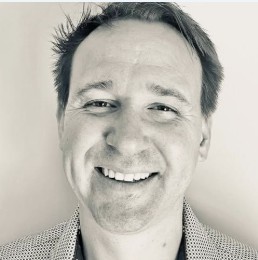
Neal Spackman
Ecologist · Regenerative Systems
Neal Spackman is an ecologist. He makes dead places come back to life and has deep experience reversing degradation across multiple ecosystems and in intra-ecosystem endeavors. Neal is a creative and entrepreneurial problem solver with over 15 years’ experience integrating ecosystem restoration with livelihood and enterprise development. He has led or advised projects across multiple ecologies and multiple countries, from desert watersheds in Saudi Arabia and UAE, to mangroves in Gambia and Mexico, to agroforestry in the Aral Sea basin of Kazakhstan and Uzbekistan and grasslands in Texas. Neal understands Carbon projects and has been in the forefront of Biodiversity credit development.
Read full bio
Neal holds a Master’s in Management from the Stanford Graduate School of Business (2019). He is an Honorary UNFCCC Impact Maker, a Stanford University TomKat Center Innovation Fellow, and winner of the Makkah Award for Excellence in Sustainable Development (2014). His other recognitions include the Rising Star Award at the World Bank Global Disruptive Tech Challenge, MIT Solve Finalist (2019), Earthshot Prize nominee (2023), Gamechanger in Sustainable Food Systems at the World Investment Forum (2023), and Foodshot Global Finalist (2024). Neal is passionate about regenerative development and is fluent in English, Arabic and Spanish.
/ GUIDING PRINCIPLES
Regenerative Development Group is a cooperative of senior professionals working at the intersection of sustainable finance, ecological restoration, institutional strengthening, and inclusive development. We support governments, GEF and GCF agencies, development partners, investors, enterprises, and communities to design and deliver initiatives that are technically credible, financially viable, socially responsible, and capable of lasting beyond initial grant funding.
Finance as a catalyst
Finance is often the tail that wags the dog: projects need capital, and the demand for financial solutions is substantial. Yet capital alone does not make a project investable or deliverable. RDG treats finance as a catalyst—using grants, concessional funding, guarantees, first-loss capital, technical-assistance facilities, results-based payments, and commercial investment to address specific risks and barriers that prevent investment from flowing at the necessary scale.
The test is not simply whether finance has been raised, but whether it is additional, appropriately structured, and able to mobilize further capital while supporting measurable climate, biodiversity, land, water, and livelihoods outcomes. We design financial mechanisms that link ecological performance and development results to durable capital flows, including payments for ecosystem services, carbon and biodiversity credit opportunities, watershed and reef-finance instruments, and landscape-scale investment platforms.
Investable means implementable
Investment readiness is not only a financial question. Credible investments require clear theory of change and results frameworks; capable institutions and delivery partners; realistic governance and operational arrangements; government ownership and policy alignment; and a pipeline of activities that can be implemented, monitored, and scaled. RDG brings finance, project design, technical analysis, institutional strengthening, stakeholder engagement, and implementation support together from the outset.
This multidisciplinary approach helps ensure that blended-finance structures respond to actual conditions on the ground rather than imposing financial models disconnected from local realities. It also enables clients to identify what capital is needed, on what terms, for which activities, and with what evidence of impact, risk management, and long-term sustainability.
Safeguards and equity
RDG believes that durable investments must protect and strengthen the people and ecosystems on which they depend. We integrate social and environmental safeguards, gender equality and inclusion, Indigenous Peoples’ and community engagement, cultural-heritage considerations, and ecological integrity into project and finance design—not as compliance exercises, but as conditions for responsible implementation and credible outcomes.
Our work is grounded in country ownership, participatory processes, and equitable benefit sharing. By aligning financial mechanisms with public priorities, community realities, institutional capacity, and ecological limits, RDG helps partners develop initiatives that can attract capital while delivering nature-positive, resilient, and locally meaningful results.
/ EXPLORE
/ GET IN TOUCH
Let’s make an impact together.
Working on a landscape-scale program? We’d like to hear from you.

